
Greg Rowland
Wheelwrighting
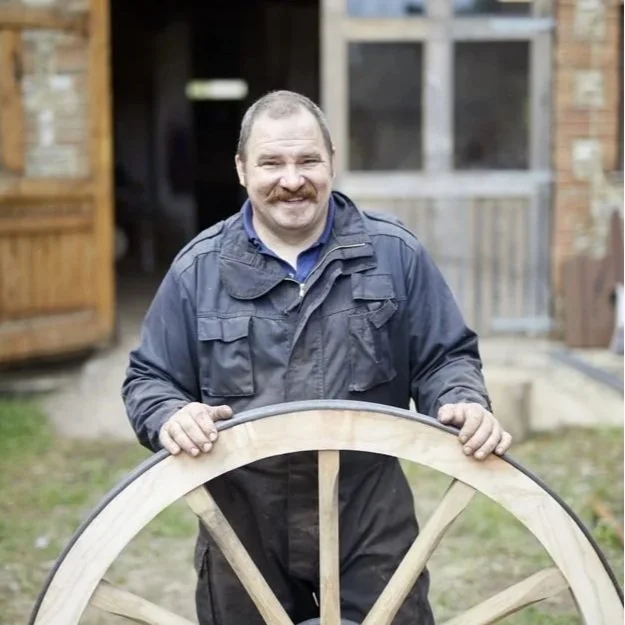
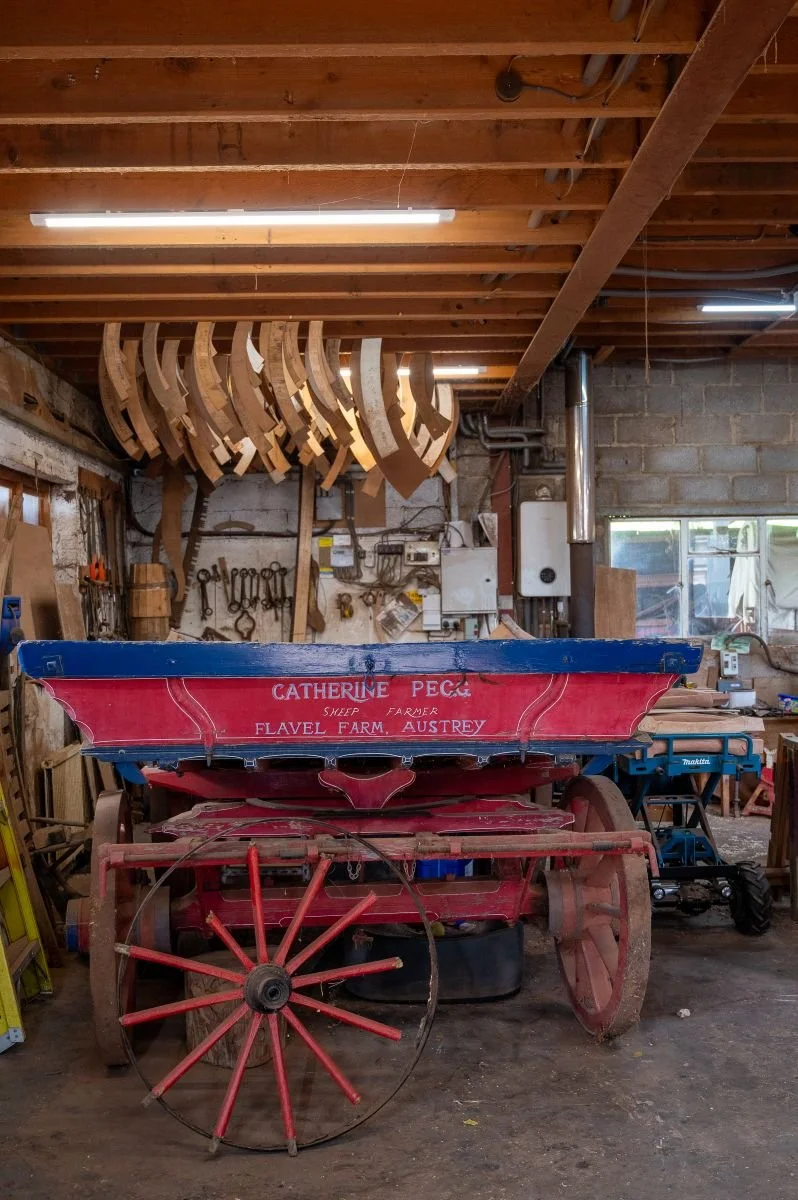
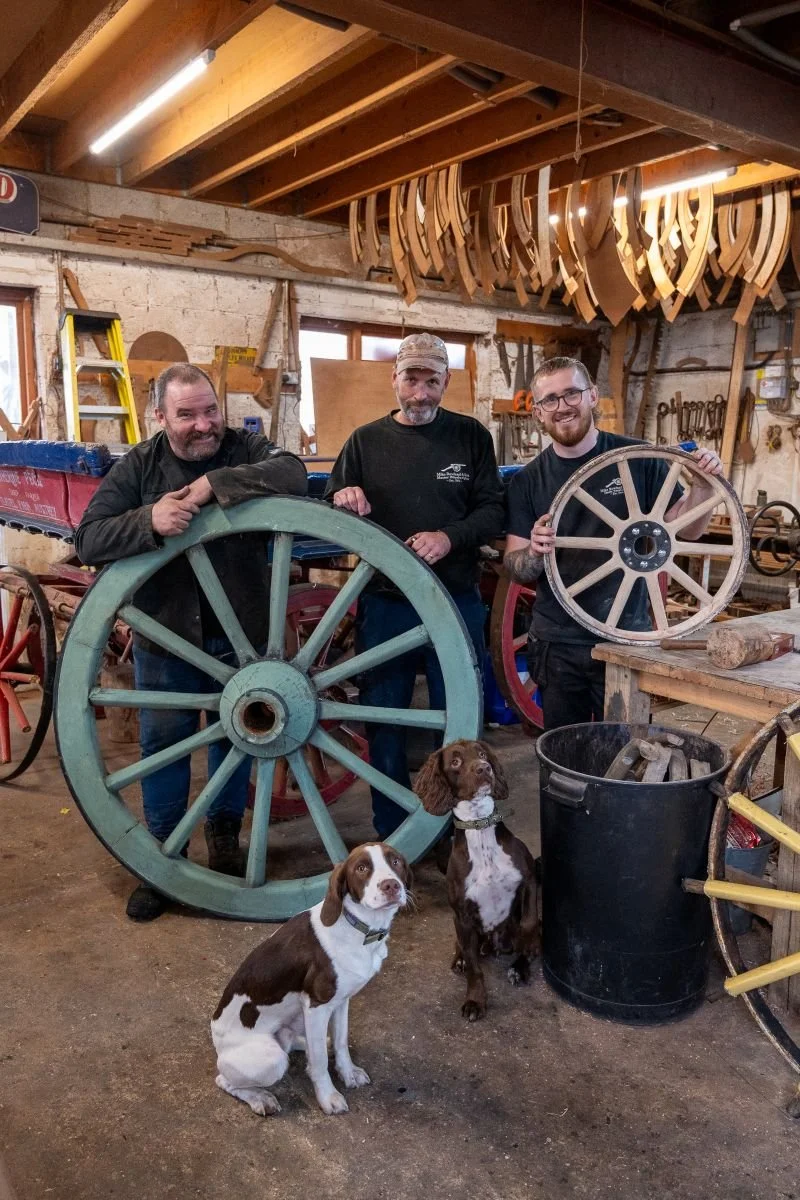
Mike Rowland & Son Wheelwrights & Coachbuilders in Colyton has a family history in the trade stretching back to the 14th century, producing the highest quality wooden wheels and horse drawn vehicles. They produce on average 200 wheels a year.
Mike Rowland has been operating from the same premises since 1964, and in that time the company has produced and restored all kinds of wheels and vehicles, ranging from roman trebuchet, farm carts and wooden bicycles through to royal, state and road coaches and fine vehicles. They also specialise in military wheel manufacture, made where possible to original techniques and plans, and repair and restore all kinds of wooden cannon. Greg Rowland was awarded an MBE in the Queen’s Birthday Honours List on 1st June 2022, recognised for his services to heritage crafts, particularly for his work in traditional wheelwrighting and maintaining royal carriages.
Find out more about the heritage craft of wheelwrighting on our Bloomberg Connects guide!

Craft, Process, and Continuity
by Nigel Dutt
This series of black-and-white photographs documents the traditional craft of wooden cart wheel making at M&D Rowland, tracing the process from raw timber to finished cart. Rather than focusing on a single finished object, the work places emphasis on the stages of making - the measured, practical decisions that shape each part of the wheel.
Each image records a specific action: cutting, shaping, sanding, jointing, assembling, and finally fitting the heated iron tyre to the completed wooden structure. The photographs show the physical skill involved in balancing precision with experience, where much of the knowledge is carried through practice and repetition rather than written instruction.
The use of black and white removes distraction and directs attention to form, texture, and gesture. Hands, tools, timber, and fire become the central subjects. The sequence highlights the relationship between maker and material, showing how traditional craft depends on close observation and an understanding of the behaviour of wood, metal, and heat.
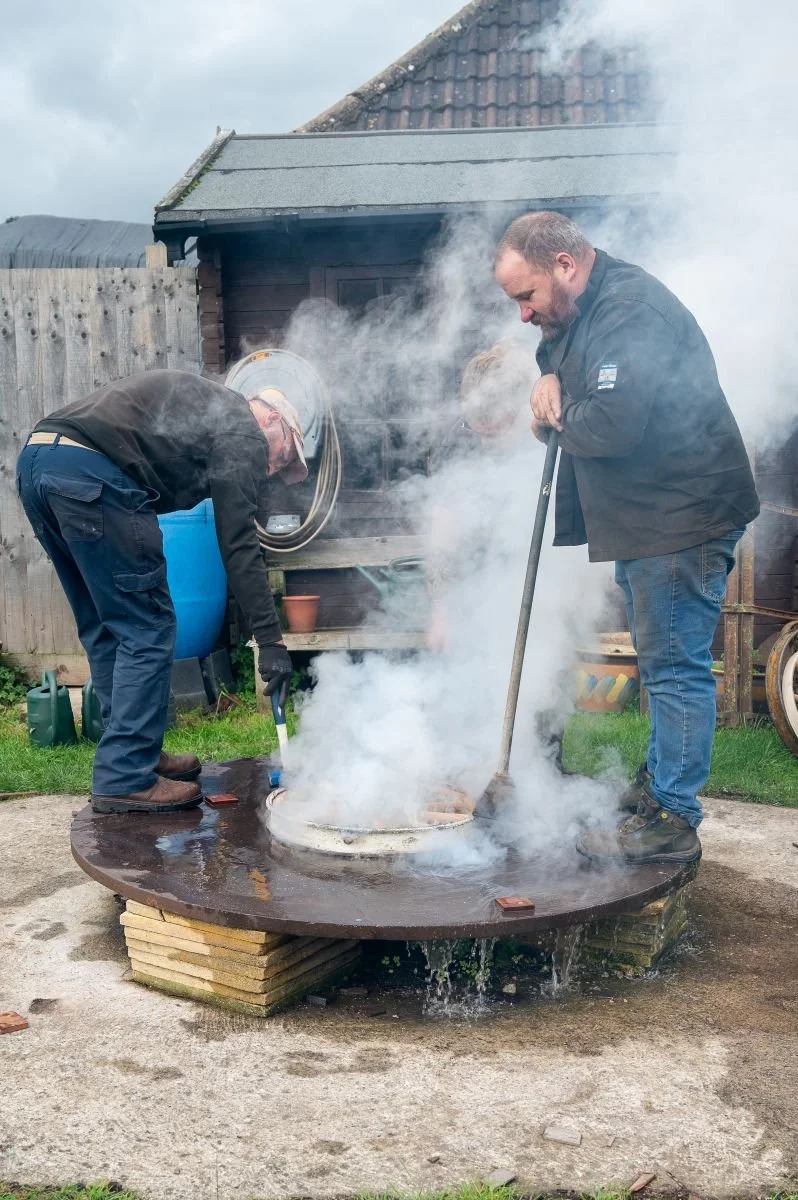
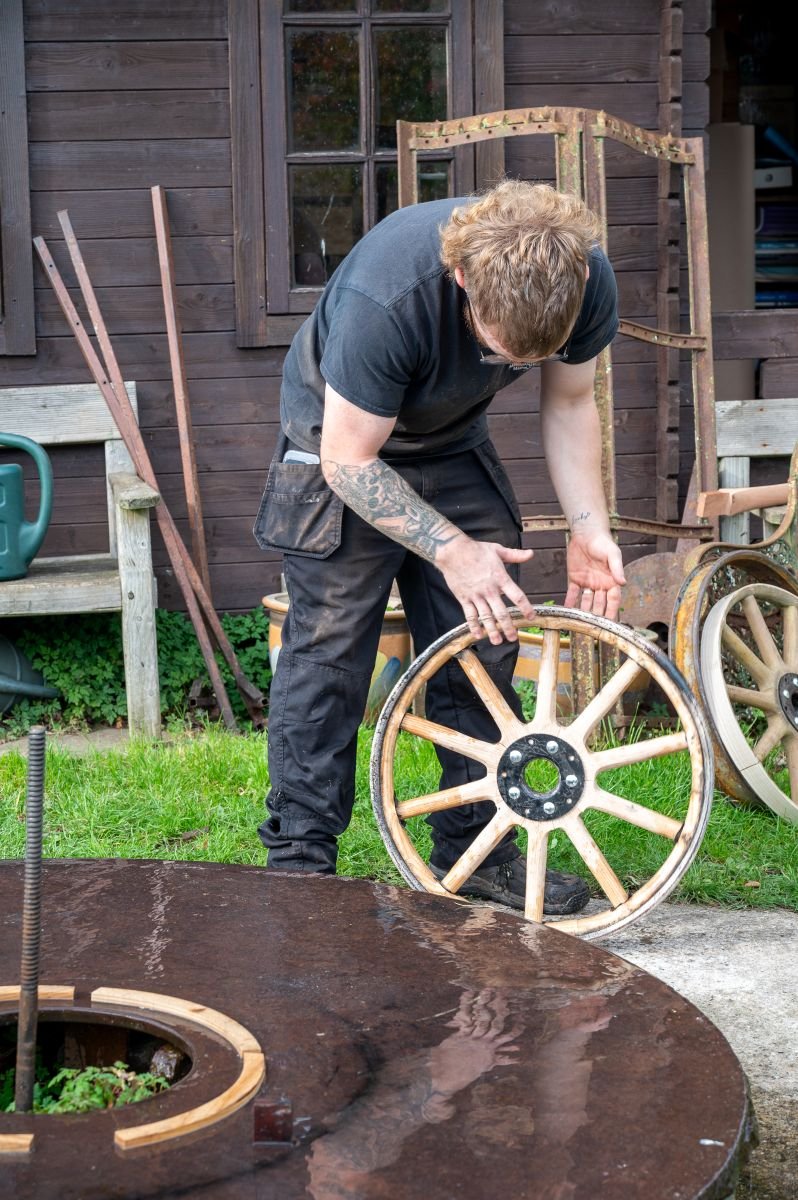
The moment of tyre fitting is central to the series. The iron rim is heated to expand, placed around the wheel, and then cooled so it contracts tightly into place. This process, both practical and visually dramatic, represents the point at which separate components become a single working object.
Beginning with the workshop sign and ending with the completed cart, the series situates the work within a continuing tradition of rural craftsmanship. It reflects on the value of skilled manual labour and the importance of preserving knowledge that is increasingly rare in contemporary production.
These photographs are not only a record of an object being made, but of a way of working - one based on patience, accuracy, and continuity across generations.